
Every August, National Wellness Month encourages people to take a closer look at their health and well-being. Many respond by purchasing healthier foods, joining a gym, committing to better sleep, or promising themselves that this time they will finally stick to a healthier lifestyle. While these are worthwhile goals, the enthusiasm that accompanies them often fades within weeks, leaving many people wondering why lasting change seems so difficult to achieve.
The answer is rarely a lack of motivation or knowledge. Most people already understand the basics of healthy eating. They know vegetables are generally better choices than chips, water is preferable to sugary beverages, and regular exercise supports good health, even though exercise has another hidden benefit that I explain to my clients. Yet despite possessing this knowledge, millions continue to struggle with maintaining a healthy weight and lifestyle. The disconnect exists because information alone seldom changes behavior.

National Wellness Month is an excellent reminder that true wellness extends far beyond nutrition. Emotional health, sleep, stress management, physical activity, relationships, and daily routines continually influence one another. A stressful day often disrupts sleep. Poor sleep weakens decision-making. Impaired decision-making increases the likelihood of emotional eating. Those choices affect energy, mood, and motivation the following day, creating a cycle that is difficult to break through willpower alone.
This interconnected view of health is precisely why Behavioral Nutrition represents a different approach to sustainable weight management.
For decades, traditional nutrition has focused primarily on what people should eat or eat in moderation. Behavioral Nutrition asks an equally important—and often more revealing—question: Why do people eat the way they do? Rather than viewing eating as a simple matter of calories and food choices, Behavioral Nutrition recognizes that every decision surrounding food is influenced by a complex interaction of psychology, neuroscience, learned habits, environmental cues, emotions, stress, reward pathways, and social influences. Lasting weight management occurs when these behavioral drivers are addressed alongside powerful strategy, and sound nutritional guidance, not after the fact.
This multifactorial perspective is supported by the Behavioral Nutrition paradigm, which integrates research from nutrition science, psychology, behavioral economics, neuroscience, and environmental design. Instead of treating weight management as a problem of insufficient willpower, the model recognizes that eating behaviors are a symptom which is shaped by numerous internal and external factors that can be identified, understood, and strategically modified to produce sustainable change.
One of the greatest misconceptions about wellness is the belief that success depends primarily on motivation. Motivation is valuable, but it is inherently temporary. It rises after an inspiring book, motivational video, a doctor’s appointment, or the beginning of a new year, only to diminish as everyday life reasserts itself as well as another powerful force which I call a person’s EatingPrint™, which I will explain. Sustainable wellness depends far less on staying motivated than on creating systems that make healthy choices easier and unhealthy choices less automatic.
This principle has long guided my work with patients. Strategy is stronger than willpower.
Strategy > Willpower Dr. Stephen Gullo Ph.D.
People rarely struggle because they lack the desire to become healthier. More often, they continue entering the same environments, responding to the same stressors, and relying on the same habits that have shaped their eating patterns for years. Unless those behavioral patterns change, new diets simply become temporary interruptions rather than lasting solutions.
Behavioral Nutrition emphasizes identifying the specific factors that influence an individual’s eating decisions. For one person, chronic stress may trigger evening overeating. For another, boredom leads to constant snacking throughout the day. Someone else may associate celebrations, social gatherings, or even success at work with excessive eating. These patterns are not signs of weakness; they are learned behaviors that can be recognized, understood, and replaced with more effective strategies.
This individualized approach is reflected in what I describe as an individual’s EatingPrint™—the unique combination of experiences, habits, emotional triggers, environmental influences, and decision-making patterns that shape his or her interactions with food. Just as no two fingerprints are identical, no two people arrive at overeating for exactly the same reasons. Lasting change requires understanding those differences rather than assuming every person should follow the same dietary rules.
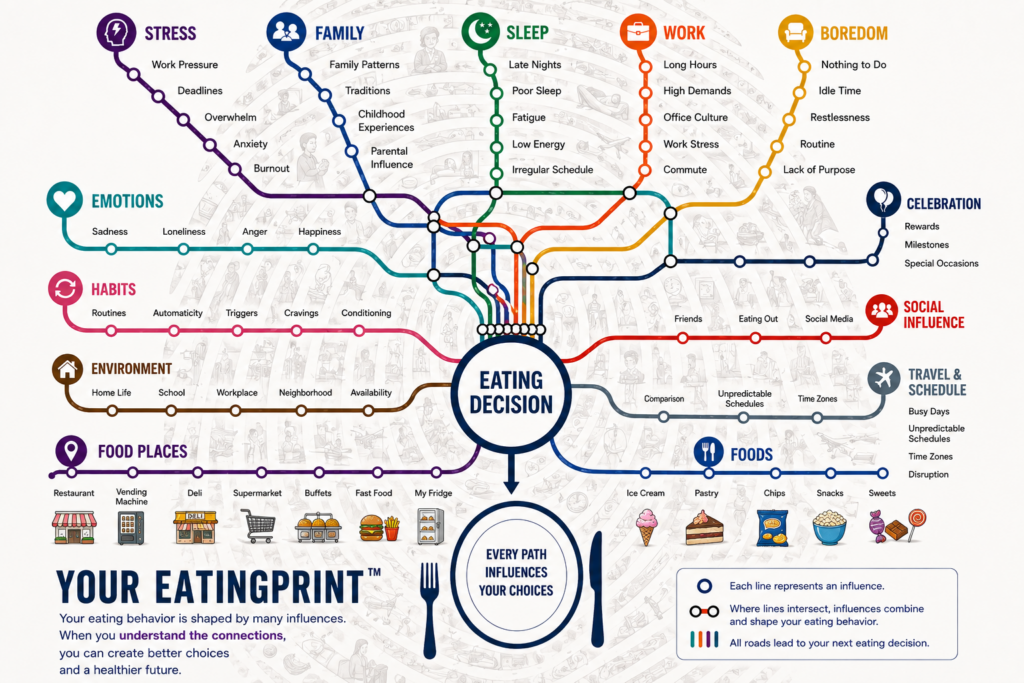
Behavioral Nutrition And Wellness – How They Work Together
National Wellness Month provides an ideal opportunity to focus on several behavioral habits that support long-term health. Protecting sleep improves emotional regulation and strengthens decision-making throughout the day. Planning meals before hunger develops reduces impulsive food choices. Organizing the home and workplace to make healthier options more accessible decreases reliance on willpower. Recognizing personal emotional triggers allows individuals to respond intentionally rather than automatically. Finally, learning to recover quickly from occasional setbacks prevents a single lapse from becoming a complete abandonment of healthy habits.
Perhaps the most important lesson Behavioral Nutrition teaches is that perfection is neither realistic nor necessary. Sustainable wellness is built through consistency, not flawless execution, and understanding error correction. Everyone occasionally overeats, skips exercise, or makes choices they later regret. The individuals who succeed over the long term are not those who never stumble; they are those who recover quickly without allowing temporary setbacks to become permanent patterns.
National Wellness Month should therefore be viewed as more than an invitation to eat healthier or exercise more. It is an opportunity to understand the behaviors that quietly influence every decision surrounding health. When stress is managed more effectively, healthier choices become easier. When environments are designed intentionally, temptation loses much of its power. When habits replace constant decision-making, wellness becomes less dependent on motivation and more reflective of daily life.

However no exercise in the world can compare to the exercise of good judgment with your food choices.
True wellness is not achieved by following the perfect diet for a few weeks. It is achieved by developing behavioral strategies that continue working long after the excitement of a new program has faded. Food remains an important part of the equation, but lasting success begins with understanding the behaviors that determine food choices in the first place.
Ready to Build Wellness That Lasts?
This National Wellness Month, don’t simply commit to eating differently. Commit to understanding the behaviors that influence every eating decision you make. Behavioral Nutrition helps individuals identify their unique EatingPrint™, recognize the hidden factors driving their food choices, and develop personalized strategies that support sustainable weight management and lifelong wellness.
There is no such thing as a successful self-coached athlete. Somewhere, sometime, someway they needed the guidance, perspective, and feedback of another. One of the greatest advantages of working with a coach is having someone who can recognize the patterns you often cannot see yourself. When you’re caught in the middle of daily routines, emotional triggers, and long-standing habits, it’s easy to mistake recurring setbacks for personal failure rather than behavioral patterns that can be changed.
An experienced coach provides objective insight, accountability, and practical strategies tailored to your unique challenges. More importantly, a coach helps you anticipate obstacles before they occur, adjust your approach when life inevitably gets in the way, and stay focused on long-term progress rather than short-term perfection. Lasting change rarely comes from information alone; it comes from applying the right strategies consistently with the guidance of someone who knows how to help you navigate the journey.
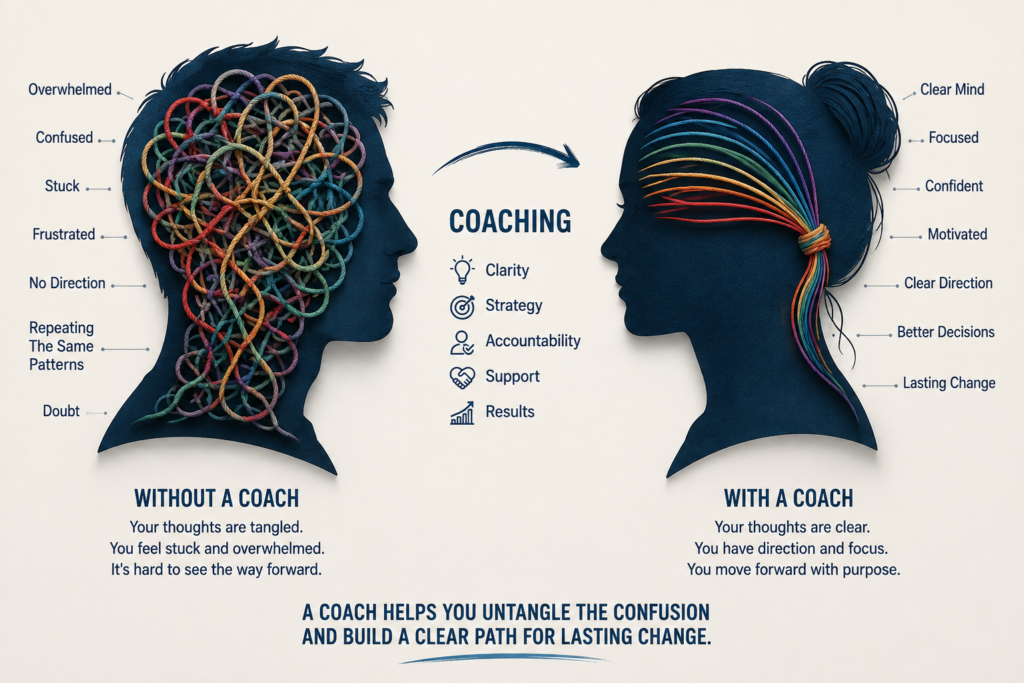
You already have the pieces. The challenge is that they’re often tangled together in ways that make lasting change difficult. A coach provides perspective, strategy, and accountability—helping you organize the complexity into a plan that is practical, personalized, and sustainable. Dr. Stephen Gullo’s Behavioral Nutrition approach goes beyond telling you what to eat. It helps you understand the behaviors, habits, emotions, and environmental influences that shape your unique EatingPrint™, so you can build strategies that create lasting results—not temporary success.
If you’re ready to stop relying on willpower and start building a strategy that lasts, schedule a personalized consultation with Dr. Stephen Gullo (212-734-7200). When behavior changes, healthy eating becomes more than a goal—it becomes a way of life.